
The Hidden Costs in Dance—A Call for Industry-Wide Change


Dance is life’s rhythm made visible – an art form older than language itself, woven into the fabric of every culture and subculture as a vessel for collective memory of struggles, joys, and hope. Unbound by social norms or laws, it is the pulse of human experience: a language of movement that maps time itself, etching the past, present, and future with the tools everyone has—the body. How many dances have civilisations birthed only to vanish? How many are facing a turning point in the history of the modern world dominated by the impacts of technology (2)? How many more will rise with the evolution of the people? Dance endures, despite changing its forms through fusion and diffusion; never once did it dissolve completely throughout history. It transcends crisis and technological revolution, uniting spectator and performer in a truth that needs no translation. Whether you identify as a dancer or not, its rhythm shapes your life – an innately pulsing life force that transforms survival into meaning.
To dedicate oneself to this art is to shoulder profound responsibility—and many invisible stressors. Behind the curtain, the studio doors, and the systems, dancers, teachers, and institutions navigate a labyrinth of hidden costs: financial precarity, emotional and physical exhaustion, and systemic fractures that often go unspoken (7). Time and again, the arts, and particularly dance, are the first to be let go. Globally, to receive any priority as an industry, dance professionals are required to justify their necessity. Sadly, there is no objective way to justify the essentiality of dance. The catch-22 situation is that dance is absolutely non-essential for survival; however, it is essential for living. In times of crisis, dance becomes essential to sustain the human spirits, but it is too easily chosen as the first industry on the agenda by authorities as non-essential for survival, and they are not wrong. The time is ripe since yesterday to reveal the costs borne by those in the dance industry.
Dance training and education expand Career possibilities
The art of dance is sustained through intergenerational mentorship—a living lineage where seasoned artists or teachers pass skills to the next generation (5, 12). Yet in an industry grappling with financial precarity and burnout, true empowerment demands more than preserving tradition; it requires redefining what dance training makes possible. Young dancers need role models who demonstrate that the discipline, creativity, and resilience forged in the studio unlock futures far beyond the stages made possible by the art form.
These trailblazers dismantle the myth that dance pathways are limiting. Their careers instead demonstrate how dance education cultivates critical transferable skills—strategic problem-solving, emotional intelligence, and adaptive leadership—essential for resilience in today’s volatile dance economy. Yet despite the evidence, these innovators remain outliers in an industry still fixated on stage performance as the sole measure of success.
This narrow focus perpetuates a culture demanding singular artistic devotion—often at the cost of holistic development beyond childhood and adolescence into adulthood. Fuelling a narrow-minded, perfectionistic concern towards dance practice that is associated with burnout, anxiety, and reduced creativity (15).
By championing these diverse career pathways, we confront a core hidden cost: the dance industry’s systemic failure to equip dancers with skills for sustainable livelihoods (22, 23). This neglect directly fuels pervasive youth disillusionment and an oversaturated job market. To transform dance from a precarious vocation into a viable life foundation—akin to how business degrees empower confident entrepreneurs across industries—we demand systemic change. This article dissects the hidden costs preventing dance from fulfilling this role, revealing how they compromise the art form’s inherent versatility and societal value.
Trailblazers proving the benefits of dance in their versatility beyond the dance stages:
Name | Job Title | Skill Transference |
Quantum physicist and ballet dancer | Adapts choreographic thinking to quantum algorithms. | |
Podiatry surgeon-in-training and former ballet rising star | Credits dance training for her achievements in medicine. | |
Dancer turned successful stockbroker turned artistic director, author and speaker | Bridges art and economics. | |
Ballet dancer/teacher and YouTuber | Leverages digital platforms to democratise training for all ages. |

Photo credit: Skjalg Bøhmer Vold 
Photo credit: KM & Friends 
Photo credit: Inspire Speakers (Australia) 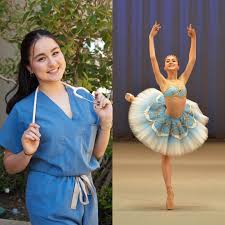
Photo credit: Miko Fogarty 
Photo credit: Australia Post
The Hidden Costs for Young Dancers—Impacts of Global Competitive Trends
No stakeholder in the dance ecosystem—dancers, parents, teachers, or studio owners—can escape the pervasive rise of global competition culture. Marketed as the fastest pathway from recreational to professional dance, competitions promise access and opportunity. Elite school talent scouts scour continents for recruits, while entry fees create an illusion of democratic access (17). Yet this decades-old, widely accepted system of entry into the dance profession demands critical scrutiny, especially when dancers’ well-being related to post-traumatic stress becomes contestable to that of war veterans (21).
Research confirms significant hidden costs and concerns regarding dance competitions’ impact on youth (9, 18)—particularly for those with still-developing executive function. Until their mid-twenties, young people lack full capacity for complex planning and decision-making (13, 19), relying heavily on adult guidance. Yet children as young as 5 endure escalating training loads—reaching up to 22 hours weekly by adolescence in competitive systems (24)—while balancing academics, extensive travel, and sacrificed social development. This prioritisation of winning over learning raises urgent questions (17):
Developmental Cost: What space remains for childhood, broad education, or identity formation beyond the studio?
Ethical Conflict: Are trophies prioritised over cognitive, emotional, and physical well-being?
Cultural Integrity Centred on Ballet: Do training systems honour dancers’ cultural heritage, or erase identities shaping their artistry?
Reforming the System
Recognising these costs, institutions like The Royal Ballet School are implementing evidence-based reforms. By delaying full-time enrolment until adolescence (13-14 years), they directly challenge the industry's damaging push for early specialisation (3, 20). This policy transcends scheduling adjustments; it rejects the exploitation of childhood for competitive gains, instead prioritising young dancers' holistic development. Research confirms this approach improves long-term commitment to rigorous training while reducing dropout rates linked to premature professionalisation (1, 11, 25). As an industry leader, the school demonstrates that systemic change can align artistic excellence with ethical practice—safeguarding both dancers’ wellbeing and the art form's future (3).
Superficial Solutions & Widening Gaps
Competition organisers increasingly layer conferences and workshops (on nutrition, mental health, careers, and inclusivity) onto events. However, these initiatives often function as mere satellites orbiting the trophy-centric core. The ultimate prize—scholarships packaged as entry to elite schools’ systems, more competition invitations, or another shot at winning—reinforces that the "D-Day" adjudication (often lacking transparent criteria) remains paramount. Well-intentioned educational sessions cannot offset the fundamental message: true validation comes from scores and medals, not process mastery or personal growth.
This trend creates a dangerous global rift. While progressive institutions adopt sustainable training models, many private studios—particularly in competition-driven markets without access to evidence-based practices—intensify early specialisation. This amplifies documented risks: a generation facing injury, burnout, and artistic disillusionment before adulthood (1). The trajectory of talents like Miko Fogarty (star of First Position), who left ballet despite extraordinary promise, underscores this crisis. Did burnout drive her exit? A lack of viable pathways? Or the sobering realisation that the system fails to offer what elite young dancers increasingly demand: meaningful intellectual engagement and opportunities to contribute to society?
A Culture Consuming Potential
This competition culture fails to cultivate artistic excellence; instead, it consumes potential and distorts development. To honour dance's essential human value, we must urgently redefine success beyond trophies and build structures that protect young dancers' physical, cognitive, and emotional wellbeing. Parents and teachers—primary guardians investing significant financial, emotional, and temporal resources—should critically examine:
Necessity: Is competition essential for artistic growth?
Value: What tangible benefits does it offer over progressive training?
Risk: What hidden costs impact this child's development?
The Global Dance Economy
The global dance economy faces a dangerous mismatch: an oversupply of rigorously trained dancers collides with severely limited stable job opportunities (10). While digital and international markets reshape demand, success increasingly depends on entrepreneurial grit, technological savvy, and adaptability—skills largely absent from traditional training pipelines (23).
The High Cost of the "Ideal" Path
The standard career path demands extreme sacrifice that costs young dancers their holistic education and childhood normalcy for early specialisation and intensive competition. By sidelining key academic subjects and intellectual breadth, they emerge at 18—biologically adolescent but expected to audition as mature professionals. Even securing a company contract, framed as the ultimate reward, unveils new vulnerabilities: they now face financial planning, career uncertainty, and psychological strain without institutional support. The hidden cost? A generation locked in professional precarity, their identities fused to an art form offering minimal safeguards against injury or obsolescence. While elite success stories are celebrated, the psychological toll on the majority—and families bearing emotional and financial burdens—remains a systemic taboo.
The Short Shelf Life & Costly Transition
Stage careers are inherently finite, with research showing women face disproportionate displacement due to different life stages such as motherhood (6). Transitioning to post-performance life for dancers of all genders (parenting, new careers) creates financial and psychological strain while destabilising companies through talent loss. This fuels a vicious cycle: young dancers fear life phases that come with ageing, while veterans lack structured exit pathways (14). The industry fails dancers at both ends of their career stages through institutional limits.
The Teaching Crisis: A Consequence of Oversupply
As performance opportunities shrink, dancers naturally turn to teaching—only to encounter a system regulated by a completely different set of values, to teach not the art business, but the business of the art, in short, classes on demand (9, 16). Parents and adult dancers became the policy makers in the private dance studio setting. Coupled with the century-old saying, "Those who can, do; those who can’t, teach," (Shaw, 1902), dance teachers and studio owners (often retired dancers) battle unsustainable economics, burnout, and societal disrespect while often having to give way to business over the artistic values they developed in their performative years. The result is a "leaky pipeline": skilled educators flee the field, leaving students with fragmented training from underpaid, overwhelmed teachers.
Three Interlocking Crises at the Root of the Industry—The Grassroots Private Dance Studios
This scarcity of qualified educators amidst a surplus of studios stems from systemic failure, fuelling a cycle of:
Labour Exploitation: Passion weaponised to justify poverty wages and unpaid work.
Career Voids: No pathways for ageing artists transitioning offstage.
Role Collapse: Blurred lines force teachers into therapist roles, parents into policymakers, and studios into surrogate families.
This diffusion of responsibility creates vulnerabilities and impedes progress. When parents, teachers, and administrators assume overlapping roles, grassroots dance ecosystems develop mismatched expectations, unsustainable emotional burdens, and eroded accountability—issues that ultimately extend through the entire industry.
Tarinao’s Call for Industry-Wide Change from Local to Global
To create a sustainable future for dance, we must shift from ad-hoc survival tactics to systemic reform from the moment a potential professional takes their first steps into a dance studio setting at the grassroots level as a child. This includes:
Actionable | Description | |
|---|---|---|
1 | A centralised regional Education and Training platform | To support dance studios (not only ballet studios) and their teachers, neutrally, regardless of systems of training centred on dancers' needs in the region, where educators can share and discuss best practices, access training, and advocate for fair working conditions while expanding capacity to support young talents locally. |
2 | Anonymous and culturally sensitive feedback systems | Moderated by carefully nominated cultural ambassador(s)—allowing teachers, students and parents to voice concerns without fear of misunderstanding due to language and cultural barriers. |
3 | Safeguarding measures | In line with local and international human rights laws, outlining measures to protect dancers from exploitation while educating parents and legal guardians of underage dancers on realistic expectations. |
4 | Funding and policy advocacy | Partner with arts organisations, activists, and lawmakers to secure better protections for dance professionals, including but not limited to studio owners, teachers, dancers, and administrators. |
The value of dance is immeasurable—it transforms lives, builds resilience, and connects people across cultures. But for the industry to thrive (4), it must reckon with its hidden costs. By establishing clear structures, protecting stakeholders, and expanding opportunities beyond the stage, we can ensure that dance remains a sustainable vocation—not just a labour of love.
Did this article resonate? See yourself in this movement?
You're why Tarinao exists. Share your insights, amplify overlooked perspectives, and join our movement.
Tarinao empowers passion-driven dance professionals while addressing a critical industry gap: the disconnect between stakeholders across training ecosystems. Join us to build a unified structure where dancers, educators, and studios operate synergistically—pooling community resources and local expertise through globally-informed frameworks. Our mission starts at dance's foundation: grassroots private dance studios where almost all young dancers begin formal training, ensuring talent thrives from first plié to professional career (8).
Simply sign up for free!
Subscribe to Tarinao
Follow and like our Instagram and Facebook
Share this with your colleagues, parents, and dancers!
Disclosure: Scope and Biases in This Article
This article focuses on documented challenges within formalised dance training systems. Two significant limitations shape its perspective:
Cultural Representation:
Our analysis draws heavily on Eurocentric and performance-centric narratives due to the current academic and industry literature gap regarding non-Western dance forms and alternative career pathways at the time of publication. While dance manifests in countless culturally significant forms globally, systemic research into its unique challenges remains underdeveloped. Amplifying stories from diverse regions of the world such as Malaysia or India—where dancers apply local artistry to technology, policy, or community work—is crucial to fully validate dance as essential to living, not just surviving. This article cannot fill that gap, but acknowledges its existence.
Ballet's Institutional Dominance:
A key structural bias underlies the discussion: the pervasive belief that ballet is the universal foundation of dance training. This is reflected in its inclusion as a core component in national secondary and tertiary dance curricula and for some, a national ballet company presence across regions (e.g., China, South Korea, Japan, Hong Kong, Malaysia, Singapore, Indonesia, Philippines, Thailand, and Cambodia). This prompts critical questions unexplored here:
Is ballet truly the foundational technique for all dance forms?
Does its pedagogy effectively serve the development of diverse traditional and contemporary dance practices?
What is the cultural legacy of ballet's introduction, often during colonial periods, on the representation and valuation of indigenous dance forms?
These limitations are inherent to the available data that are referenced in the article and the dominant structures shaping the "hidden costs" we presented. They represent significant areas for future research and industry reflection.
References
Davis, C. U. (2018). Laying New Ground: Uprooting White Privilege and Planting Seeds of Equity and Inclusivity. Journal of Dance Education, 18(3), 120–125. https://doi.org/10.1080/15290824.2018.1481965
McCarthy-Brown, N. (2018). Owners of Dance: How Dance Is Controlled and Whitewashed in the Teaching of Dance Forms. In: Kraehe, A., Gaztambide-Fernández, R., Carpenter II, B. (eds) The Palgrave Handbook of Race and the Arts in Education. Palgrave Macmillan, Cham. https://doi.org/10.1007/978-3-319-65256-6_27
Prichard, R. (2019). From Color-Blind to Color-Conscious: Advancing Racial Discourse in Dance Education. Journal of Dance Education, 19(4), 168–177. https://doi.org/10.1080/15290824.2018.1532570
Schupp, K. (2020). Performing whiteness on the competition stage: ‘I dance all styles.’ Research in Dance Education, 21(2), 209–224. https://doi.org/10.1080/14647893.2020.1798395
References
Aujla, I. (2012). Commitment, adherence and dropout among young talented dancers: A multidisciplinary mixed methods investigation (Doctoral dissertation, City University London).
Berg, T. (2020). Manifestations of surveillance in private sector dance education: the implicit challenges of integrating technology. Research in Dance Education, 21(2), 135–152. https://doi.org/10.1080/14647893.2020.1798393
Berry, K. (2025, August 7). The evolution of ballet training: considering what’s beyond early specialisation. Royal Ballet School. https://www.royalballetschool.org.uk/2025/08/07/the-evolution-of-ballet-training-considering-whats-beyond-early-specialisation/
Chappell, K., Redding, E., Crickmay, U., Stancliffe, R., Jobbins, V., & Smith, S. (2021). The aesthetic, artistic and creative contributions of dance for health and wellbeing across the life course: a systematic review. International Journal of Qualitative Studies on Health and Well-Being, 16(1). https://doi.org/10.1080/17482631.2021.1950891
Chen, X.Y., & Ha, S. (2022). Structural Process and Impacts of Mentoring Module in Ballet Certificate Program: A Case Study on CBTS Program, Royal Academy of Dance, Malaysia. Harmonia: Journal of Arts Research and Education.
Conor, B., Gill, R., & Taylor, S. (2015). Gender and Creative Labour. The Sociological Review, 63(1_suppl), 1-22. https://doi.org/10.1111/1467-954X.12237 (Original work published 2015)
Dwarika, M. S., & Haraldsen, H. M. (2023). Mental health in dance: A scoping review. Frontiers in Psychology, 14, 1090645. https://doi.org/10.3389/fpsyg.2023.1090645
Ferrell, R. A. (2025). Navigating the Dance Sector: A Holistic Analysis of Career Sustainability Through Occupational Identity, Motivation-Hygiene, and Transaction Cost Theories. American Journal of Arts Management, 13(2).
Foster, S. L. (2017). Dance and/as competition in the privately owned US studio. The Oxford handbook of dance and politics, 53-76.
Hopper, L.S., Blevins, P., Erskine, S., Hendry, D., Hill, R. & Longbottom, R. (2020) Sustaining dancer wellbeing through independent professional dance careers. Theatre, Dance and Performance Training, 11:4, 470-486, DOI: 10.1080/19443927.2020.1740312
Jowett, G. E., Hill, A. P., Curran, T., Hall, H. K., & Clements, L. (2021). Perfectionism, burnout, and engagement in dance: The moderating role of autonomy support. Sport, Exercise, and Performance Psychology, 10(1), 133.
Lee, Deuk-Gon, & Kim, Ju-Yeon (2023). The Effect of Mentoring Experience of Dance Major on Immersion and grit. Korean Journal of Sports Science, 32(2), 629-637. 10.35159/kjss.2023.04.32.2.629
Mills, K. L., Goddings, A. L., Herting, M. M., Meuwese, R., Blakemore, S. J., Crone, E. A., ... & Tamnes, C. K. (2016). Structural brain development between childhood and adulthood: Convergence across four longitudinal samples. Neuroimage, 141, 273-281.
Nakajima, N. (2011). De-aging dancerism? The aging body in contemporary and community dance. Performance Research, 16(3), 100-104.
Nordin-Bates, S., Hill, A., Cumming, J., Aujla, I., & Redding, E. (2014). A longitudinal examination of the relationship between perfectionism and motivational climate in dance.. Journal of sport & exercise psychology, 36 4, 382-91 . https://doi.org/10.1123/jsep.2013-0245.
Posey, E. (2002). Dance Education in Dance Schools in the Private Sector: Meeting the Demands of the Marketplace. Journal of Dance Education, 2:2, 43-49, DOI: 10.1080/15290824.2002.10387207
Sabri I. The Ethical Considerations and Impact of Children Taking Part in Dance Competitions. Journal of Indian Academy of Forensic Medicine. 2025;46(3):401-406. doi:10.1177/09710973251316355
Schupp, K. (2018). Dancing the ‘American Dream’: Dance Competition Culture in Times of Shifting Values. Nordic Journal of Dance, 9(1), 2018. 32-43. https://doi.org/10.2478/njd-2018-0004
Tau, G., Peterson, B. Normal Development of Brain Circuits. Neuropsychopharmacol 35, 147–168 (2010). https://doi.org/10.1038/npp.2009.115
The Royal Ballet School. (2025). The School Announces Future Changes To Entry Into Full-time Training And New UK Scholars Programme. https://www.royalballetschool.org.uk/2025/07/29/the-school-announce-future-changes-to-entry-into-fulltime-training/
Thomson, P., & Jaque, S. V. (2015). Posttraumatic Stress Disorder and Psychopathology in Dancers. Medical Problems of Performing Artists, 30(3), 157–162. https://doi.org/10.21091/mppa.2015.3030
Van Assche, A., & Laermans, R. (2016). Contemporary dance artists in Brussels: a descriptive report on their socio-economic position.
Van Assche, A. (2018). Dancing precarity: a transdisciplinary study of the working and living conditions in the contemporary dance scenes of Brussels and Berlin (Doctoral dissertation, Ghent University).
Volkova, V., & Kenny, S. (2020). Musculoskeletal injuries and dance exposure across three years in elite adolescent ballet dancers: is there a pattern? British Journal of Sports Medicine, 54, A65. https://doi.org/10.1136/bjsports-2020-IOCAbstracts.153
Walker, I. J., Nordin-Bates, S. M., & Redding, E. (2012). A mixed methods investigation of dropout among talented young dancers: Findings from the UK Centres for Advanced Training. Journal of Dance Medicine & Science, 16(2), 65-73. (25)


Comments